At Hayes Locums, we have always relied on relationships, not algorithms, to create matches where providers can truly thrive. That’s why our physicians and advanced practice providers keep coming back. We focus on the relational, not the transactional, because we know that healthcare recruitment isn’t just about filling a temporary role. It’s about creating connections that allow everyone—patients, providers, and facilities—can thrive.
We sat down with pediatric otolaryngologist Dr. Andrew Shapiro and his consultant Hunter Wykoff, to hear about how they built a successful working partnership—and a lasting friendship.
When and how did you both start working together?
Dr. Shapiro: Before locums, I had practiced in central Pennsylvania for 35 years, and then we decided to move to Virginia, because two of my children and my grandchildren are there. I wasn’t anxious to retire. I loved my practice. I loved my work, and I would have probably just been found dead in the office or in the operating room one day, so my wife was smart to say that it was time to retire. But realistically, I probably was not mentally ready to not be working.
I had about a year to prepare, but it still felt abrupt. I retired, moved, left everything that I had ever known, to come to Virginia. After three months, I felt the need to go back to work—and that’s when this inquiry from Hunter came. I had received lots of inquiries in the past, but this one was the right place at the right time and the right person, and I felt strongly that I needed to respond.
Hunter: I still remember where I was in the office when we talked. I was sitting at a high top desk chair, and I would get up every five minutes, walk around, go sit back down, for 30 or 40 minutes as we went over Dr. Shapiro’s experience, what he was looking for, what locums looks like, and what goes into it. Once we made that initial connection of getting to know each other and figuring out what Dr. Shapiro was looking for, I felt like I had a great sense for what I could help him accomplish. And then we started to put something together.
Dr. Shapiro: I was immediately comfortable with Hunter. It took longer than we thought for me to start working since I had to get licensed in various states, but Hunter was so supportive. And Hayes made it as easy as it could possibly be. There were some things I had to do, but anything I didn’t have to do, they did. It was pretty seamless.
I started out working in a couple of different locations, but then it became clear that I was really comfortable at one place, and I’ve had a stable position there ever since. The program I work in has really grown a lot through Hayes—I’ve actually gotten to participate in the recruitment of other physicians who are at the same facility now. Hunter did all the work, but I got to speak to them, answer questions that maybe Hunter couldn’t because he hasn’t worked there as a pediatric otolaryngologist, and encourage them to to consider it. Most of them continue to come back.
It’s been a pleasure, and we all have a relationship now outside of work.
How often do you check in with each other?
Dr. Shapiro: We’re generally planning the schedule about six months ahead. The travel team puts together all of those arrangements ahead of time, but Hunter’s obviously included in those conversations. Shortly before I leave for an assignment, he always sends me a message. There’s probably been four or five times when there were travel issues where I’ve gotten in touch with Hunter to let him know that we have to change plans, and he always handles it so smoothly. He just makes it happen. I don’t ever worry about it.
We also talk a lot about the assignment where I work: I tell him about my experience, and he communicates the things I should know. It’s a very open relationship—we try to give each other the insight and information to help each other.
Hunter: I always say to physicians when they’re going somewhere new, there are always going to be some minor speed bumps. You’ve never been there before. You’re working with new teams. You’re working with new equipment at a place you’ve never been. But once you get over that initial hump, and you get through the paperwork and the speed bumps, the communication kind of flips from being all about business to being more relational, which is really nice.
How has locum tenens shaped your career, Dr. Shapiro?
Dr. Shapiro: Hunter and I really distilled down what would be the right thing for me from the beginning. What I love about locums is that when I’m at work, I can be completely mentally and emotionally dedicated to it. I’m in a hotel, not at home, so for the first time in my life I’m not leaving my family if I get called in. I’m doing exactly what I’m there to do. But there are boundaries: When I leave, I don’t belong to them anymore.
Locums has provided some career closure that I would have never had in any other situation. This is a wind down of my career—it’s not something I’m doing on top of other things. I know I still have something to offer, but I’m also glad that I’m not offering it every day, on top of having to manage a practice and run a surgery center. I didn’t realize how much those things grind away at you.
If locums had been my career, I could have done this forever. It’s just so much more defined. When I’m not working, I feel retired, and when I am working, I feel like I’m able to be there 100%. I really love that.
Tell us more about your relationship. How has it developed over the years?
Hunter: With most physicians, the initial relationship is 80% business and 20% personal, and then once you get to know each other, you settle into a groove. I think at this point in Dr. Shapiro’s and my relationship, that percentage scale has now flipped. Now it’s more like 80% personal checking in on each other, getting life updates, and the other 20% is specific to locums, the assignment, travel, logistics, all that stuff.
Dr. Shapiro: There’s always some business in our calls, but most of it is just talking, making sure the other person’s doing okay. Hunter always checks in, and I really appreciate that. At this point there’s not a lot we need to talk about when it comes to work, but the fact that he checks in anyway to make sure everything is okay is awesome. I have complete confidence that if I need to get in touch with him, he’s going to answer. I never feel like I have to badger him, because I know if I need him, he’s going to be there.
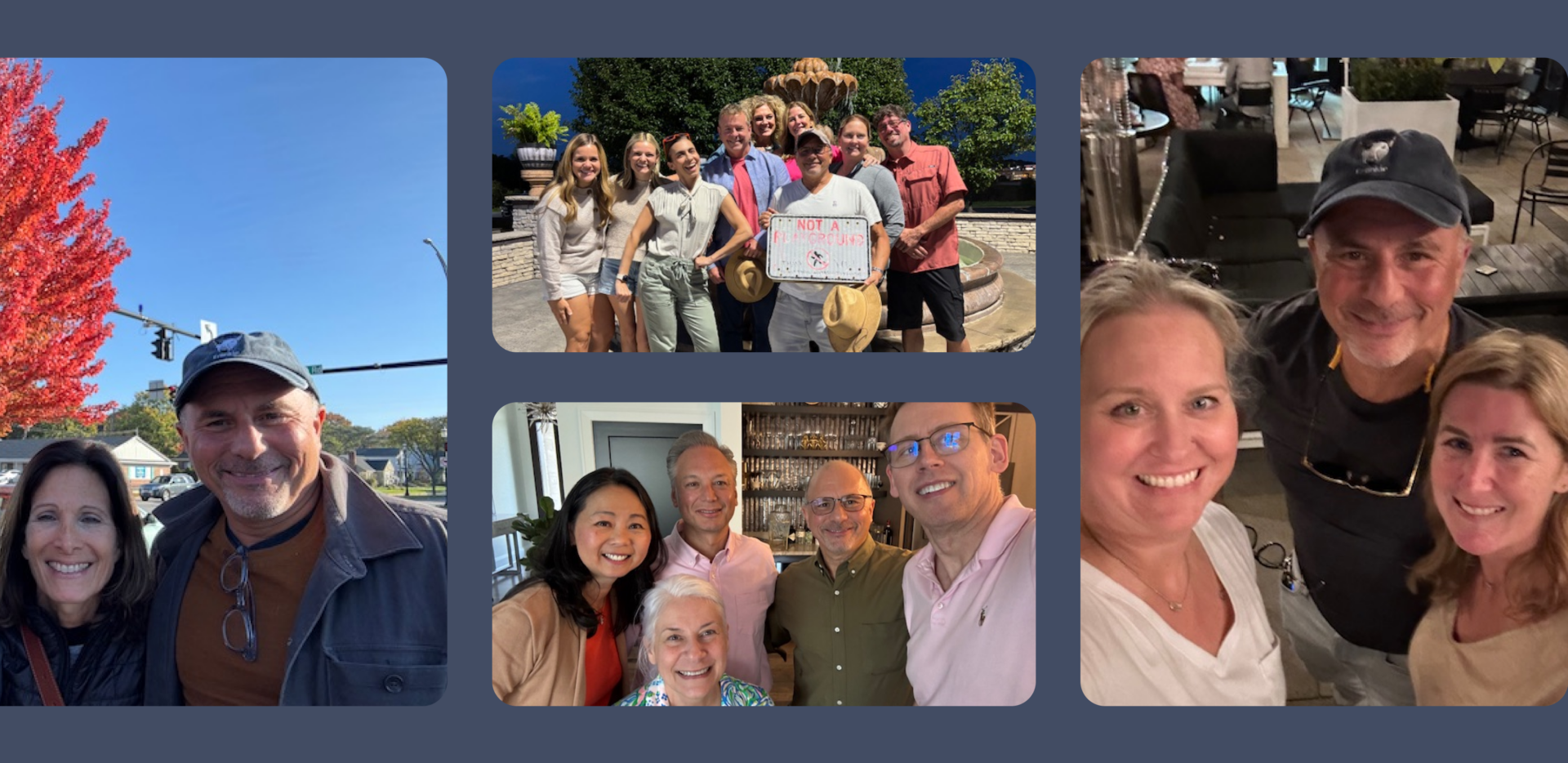
Hunter: We send each other pictures—he’ll send me his beach cocktail when he’s off at his beach house for a few weeks. We kind of live vicariously through each other. Sometimes he’s my therapist or my mentor, and then sometimes—maybe less than the other way around—I feel like I can be the same.
Dr. Shapiro: I have sons his age, so it’s a very comfortable relationship for me. My sons are old enough to be my friends now, and this is very similar to that kind of relationship, where there’s things I’ve learned that I want to make sure I pass on, and I do pass them on, and he can either take it or leave it, just like my sons do.
What makes for a good working relationship between a consultant and a locums physician?
Dr. Shapiro: I’ve been married for 40 years and I had the same business partners for 30 years. I think it’s about commitment to one another and trust. You start out with integrity in your commitment, and then all your decisions just follow from that. That’s your compass.
In most relationships, that’s the most important thing: committing to the integrity of that relationship, and not violating each other’s trust. Everything follows from that. I know that Hunter is not going to sell me down the river, and I’m certainly not going to do that to him. We’re not going to hurt each other.
Not to mention, he’s good at his job: all the mechanical stuff, he handles so well. But it’s the soft skills that matter. They make everything else seamless.
Hunter: My answer in one word, is trust. That’s something that I preach to new consultants coming up, is to always lead that with the relationship. I’m a straight shooter. I want to do right by my physicians. I approach it more like a partnership than a one-way street. That’s why I often become friends with the physicians that I work with, rather than it always being strictly business. Establishing a true bond tends to lead to a successful long-term relationships. Being a better person helps you be better at your job.
Dr. Shapiro: All of our decision-making is also shared. Neither one of us can do this without the other, and I think that translates into how we make decisions.
How have you built that trust with each other?
Hunter: Ultimately it’s about your own internal morals. A lot of it is putting yourself in the other person’s shoes and treating them how you would want to be treated. There’s not a whole lot I wouldn’t go out of my way to do to better strengthen a relationship and help a physician and hospital out.
It’s just about doing right by others. Ultimately, if you do right by somebody for long enough, they’ll continue to do the same for you.
Dr. Shapiro: Everything goes better if you focus on relationships. We lose so much when we do everything digitally, and lose that human interaction with each other. The whole experience is better for everyone when it’s based on not just doing the best for yourself, but doing the best for the other person.
What would you say to any physicians who are considering locums?
Hunter: When I first started this job five years ago, I didn’t know what locums was. I didn’t remember the last time I went to a doctor’s office. Now I’ve been doing it for five years now, and I see the bigger picture. It is cool to have a career where you feel like you’re making a difference, getting underserved communities top-quality care. That’s not something I ever expected to have out of this five years ago when I was coming out of college.
Dr. Shapiro: Of the three people who started my practice, the third of them is winding down now, and I told him he should do locums. When people are geographically driven in terms of where they want to practice, I think you miss out on the pleasure of being needed in a community that maybe would have a harder time recruiting some of these subspecialties. I can’t tell you how fortunate I feel to be doing that.